Sheets vs. Duvet vs. Comforter: How to Layer a Bed
The difference between duvets, comforters, quilts, and coverlets — plus how to layer sheets and bedding for the temperature you actually sleep at.
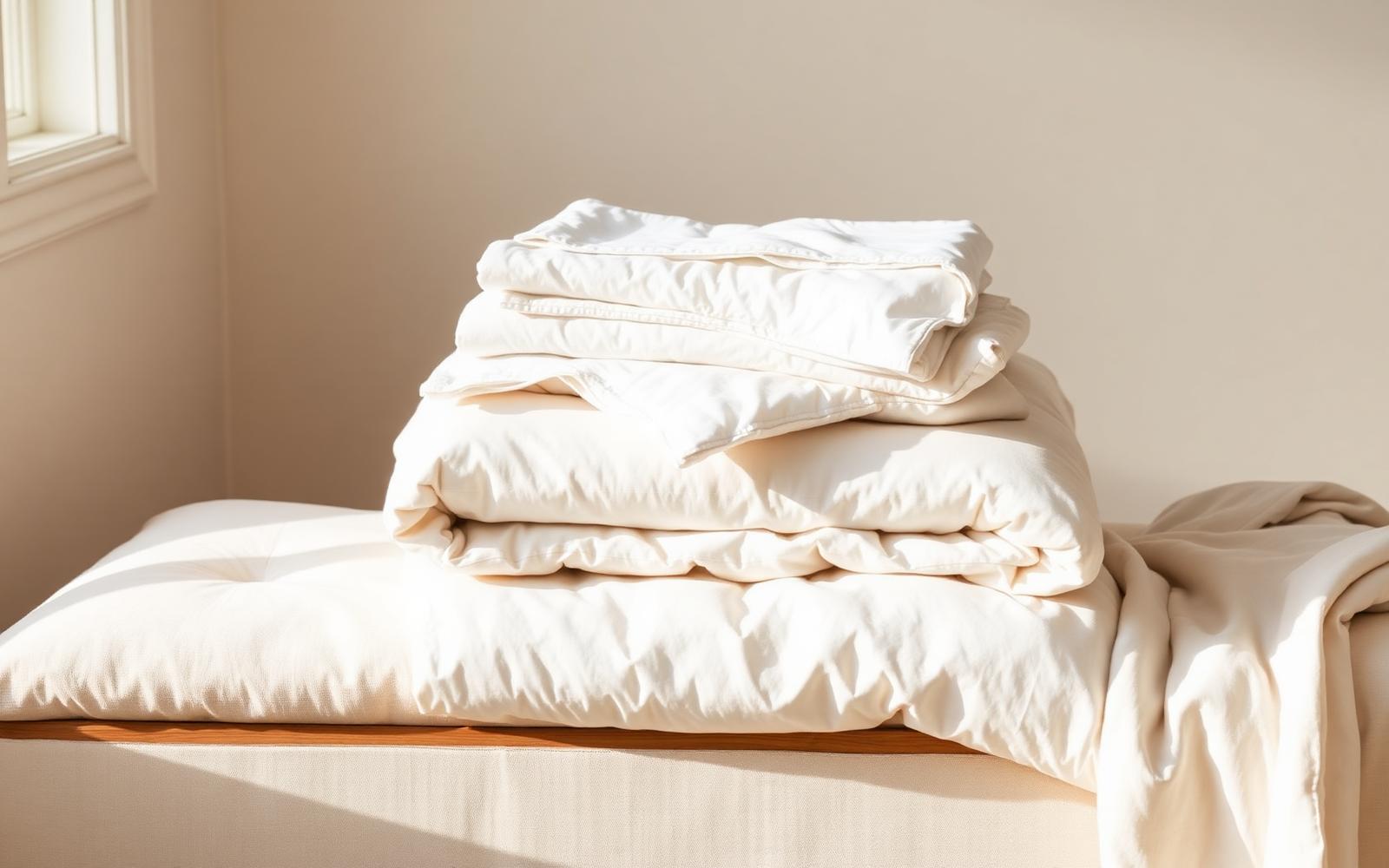
Bedding terminology is a mess, largely because American and British usage diverged and marketing never cleaned it up. The practical question underneath the vocabulary is simple: how many layers do you need, and which ones can you swap seasonally without rebuying everything?
The vocabulary, settled
- Sheets: the layer against your skin. A fitted sheet on the mattress, a flat sheet above you, and pillowcases.
- Duvet: an unfilled-looking insert — down, down alternative, wool, or silk — meant to be used inside a removable duvet cover. Two pieces, always.
- Comforter: a single quilted piece with the fill sewn permanently inside. One piece, used as-is on top of the sheets.
- Quilt: a thin, flat, stitched three-layer piece. Lightweight warmth, often used as a summer top layer or a decorative fold.
- Coverlet: thinner still, often woven rather than filled. Purely a layering and styling piece.
- Blanket: a single woven layer — cotton, wool, fleece — with no fill.
Duvet or comforter?

A duvet is the better long-term system. The cover comes off and goes in the washing machine weekly, the insert gets washed once or twice a year, and you can change the entire look of the bed for the price of a cover. You can also swap a summer-weight insert for a winter-weight one and keep the same cover.
A comforter is simpler day to day — no stuffing a shifting insert into a cover — but the whole thing has to be laundered, which most home machines struggle with in Queen and King sizes. Comforters also tend to flatten faster because the fill can migrate within the sewn channels.
The honest summary: choose a duvet if you care about washing, longevity, and seasonal flexibility. Choose a comforter if you want to make the bed in ten seconds and replace it every few years.
How many layers you actually need
Layering exists so you can regulate temperature without changing your whole setup at 3 a.m. A workable year-round system for most bedrooms:
- Mattress protector — cooling, waterproof, always on.
- Fitted sheet — Tencel or long-staple cotton percale for warm sleepers, sateen for cool sleepers.
- Flat sheet — the layer you'll actually use alone on hot nights.
- Duvet or comforter — your main insulation, weight matched to the season.
- Optional quilt or blanket at the foot — pull up when the room dips, kick off when it doesn't.
Fabric decides temperature more than fill weight
Sleepers who run hot usually blame the duvet when the sheets are the real problem. A dense sateen or a polyester-blend microfiber traps a layer of humid air against the skin. A breathable fiber moves that moisture out.
Tencel lyocell — the eucalyptus-derived fiber in our sheet set — is the standout for hot sleepers: it wicks moisture faster than cotton and sleeps notably cooler than linen, with a smooth, low-friction hand. Percale cotton is the classic crisp, breathable option. Linen is airy and durable but has a textured feel some people never warm to. Sateen is the warmest of the natural weaves — lovely in winter, punishing in August.
Sizing the top layer
Buy the duvet or comforter one size up from your mattress if two people share the bed. A Queen insert on a Queen bed leaves almost no drape once two sleepers each claim their half, which is the actual mechanism behind most nighttime blanket disputes. A King insert on a Queen bed solves it permanently for about forty extra dollars.
Care that makes bedding last
- Wash sheets weekly in cold water; hot water breaks down fibers and sets body-oil stains.
- Tumble dry low and pull sheets while slightly damp to cut wrinkling.
- Skip fabric softener on Tencel and performance fabrics — it coats fibers and kills wicking.
- Wash duvet covers weekly, inserts once or twice a year, and air the insert in sunlight between washes.
- Rotate two sheet sets rather than washing one constantly; each set lasts roughly twice as long.
Start the layers with cooler sheets
Shop the Tencel Sheet Set