Platform Bed vs. Box Spring: Which Does Your Mattress Need?
Platform beds, box springs, foundations, and bunkie boards compared — which support your mattress needs and what each one changes about the feel.
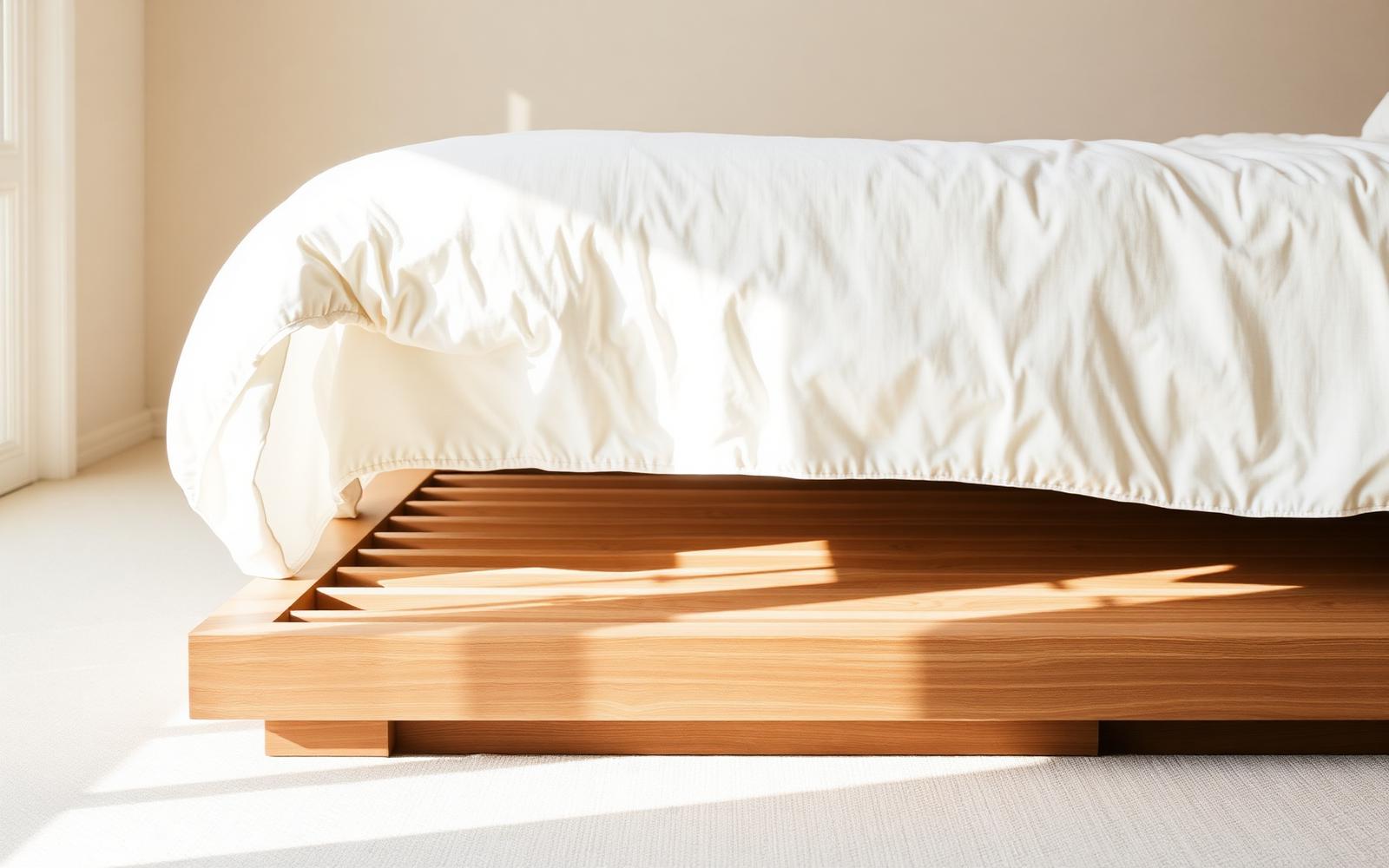
Box springs made sense when nearly every mattress was an innerspring with a thin comfort layer. The coils inside the box spring absorbed shock and added give to a bed that was otherwise unforgiving. Modern hybrid and foam mattresses do that work internally, which makes the box spring not just unnecessary but often counterproductive.
Here's how the four support options actually differ, and which one your mattress wants underneath it.
What each one is
- Platform bed: a frame with a built-in slatted or solid deck. No additional support needed.
- Box spring: a fabric-covered wooden or steel frame with springs inside. Designed to flex with an innerspring mattress.
- Foundation: looks like a box spring but has no springs — a rigid wood or steel grid inside a fabric cover. Flat, firm, and correct for modern mattresses.
- Bunkie board: a thin (1 to 3 inch) rigid panel that converts a box-spring-era frame into a flat platform.
Retailers use 'box spring' loosely for all four, which is where most of the confusion comes from. If a salesperson tells you a mattress 'needs a box spring,' ask whether they mean an actual sprung unit or a rigid foundation. Almost always they mean the second.
Why box springs hurt modern mattresses

A hybrid mattress already has a coil unit engineered to deflect a specific amount under load. Stack it on a second set of springs and the two systems compound: the mattress sinks further than designed, the comfort layers stretch, and the sleeper's hips drop below the shoulders. You feel it as a hammock effect and a bed that runs warmer, because the extra compression closes the airflow channels in the coil layer.
Foam mattresses fare even worse. Foam needs a flat, continuous plane. Set on a sprung base, it takes on the deflection pattern of whatever is underneath, and the impressions become permanent.
What the LINDEN needs
Any flat, rigid surface with adequate support: a slatted platform frame with slats 3 inches apart or less, a solid platform deck, a rigid foundation, an adjustable base, or the floor. Queen and larger need a center support with legs to the floor. That's the whole requirement.
Cost and height comparison
- Platform frame: $300–$2,000. Deck height 6 to 15 inches. One purchase, no extras.
- Foundation + basic metal frame: $200–$500. Adds 5 to 9 inches. Useful if you want a taller bed cheaply.
- Bunkie board: $80–$200. Adds 1 to 3 inches. The rescue option for an existing frame.
- Adjustable base: $899–$2,099. Adds 12 to 15 inches. Changes the feel of the bed, not just the height.
Keeping a box spring you already own
You can, if you add a bunkie board on top to create a flat plane, and if the box spring itself is firm, level, and less than about eight years old. Sight down the top surface from the corner — any visible dip means it's done. A dying box spring will pull a brand-new mattress down with it, and the warranty won't cover the result.
The floor question
Putting a mattress directly on the floor works structurally, but it blocks airflow underneath. In humid climates or on concrete slabs, moisture condenses against the underside and can lead to mildew. If you sleep on the floor, stand the mattress up against a wall for a few hours every couple of weeks to let it dry out.
A hybrid built for flat, rigid support
Shop the LINDEN Mattress