Best Mattress for Heavy Sleepers (230 lbs and Up)
What heavier sleepers actually need from a mattress — coil gauge, foam density, edge support, and durability — plus what to avoid.
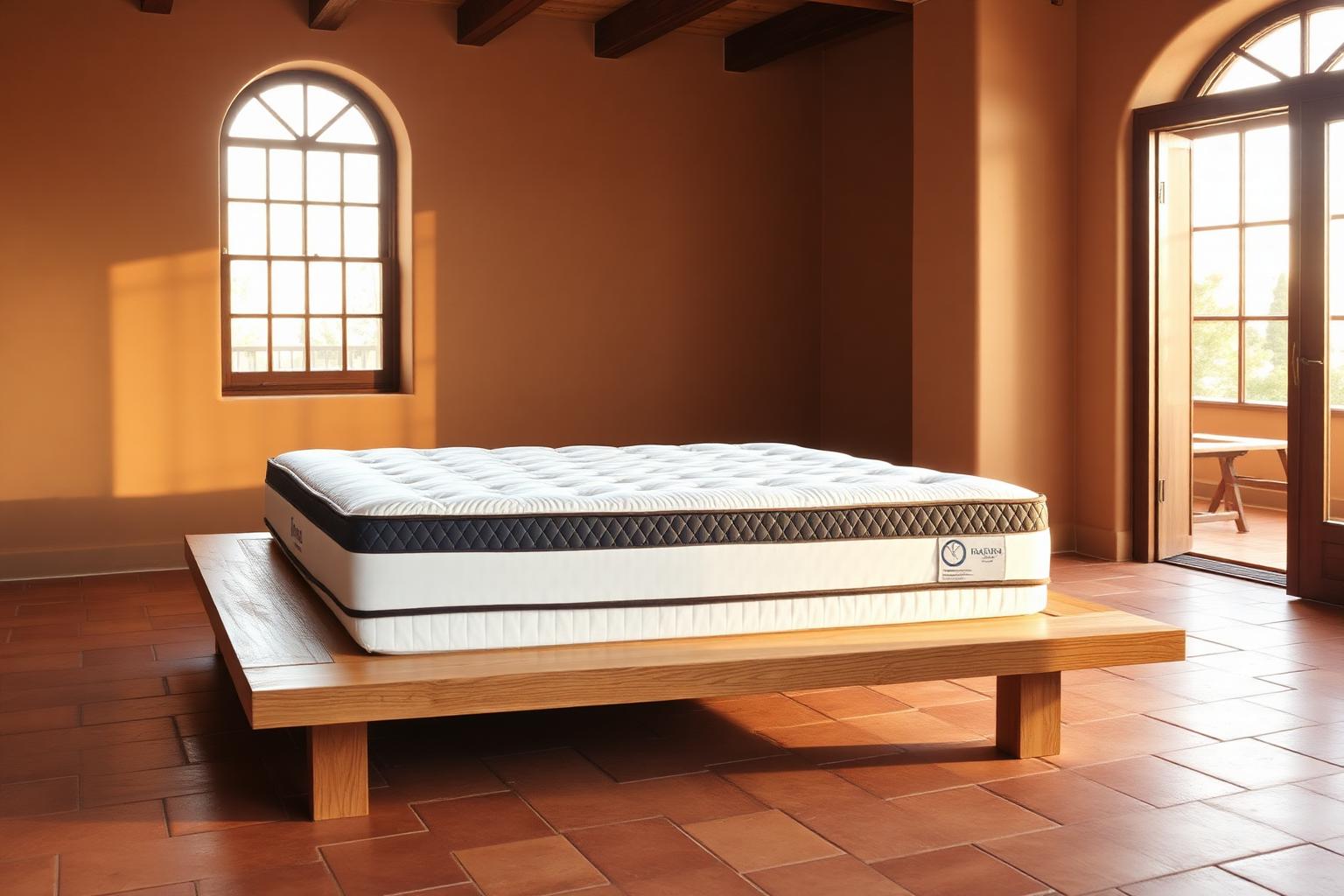
If you weigh 230 pounds or more, you already know the mattress industry wasn't designed with you in mind. Most beds are engineered, tested, and reviewed around an average sleeper of 150 to 180 pounds. Put more weight on the same construction and everything accelerates: the comfort layers compress further, the coils work harder, impressions form sooner, and a mattress that felt medium-firm in the store can bottom out at home within a year.
The good news is that the fix isn't exotic. Heavier sleepers don't need a 'special' mattress — they need a well-built one with the right component specs. This guide covers exactly which specs matter, which marketing terms to ignore, and how to make a bed last a decade instead of two years.
Why standard mattresses fail heavier bodies
Mattress comfort is a ratio between your body weight and the resistance of the materials under you. A foam layer tuned to cradle a 160-pound sleeper offers a 250-pound sleeper much deeper compression — which means more sink at the hips, more spinal misalignment, and more heat retention because more of your body is enveloped in foam. The mattress isn't defective; it's just being asked to do a job outside its design range.
The second failure mode is durability. Polyurethane foams lose resilience with repeated compression cycles, and heavier bodies complete those cycles with more force. A comfort layer that holds up for eight years under an average sleeper may develop permanent body impressions in three under a heavier one. This is why the materials list matters more for you than for almost any other shopper.
The specs that actually matter
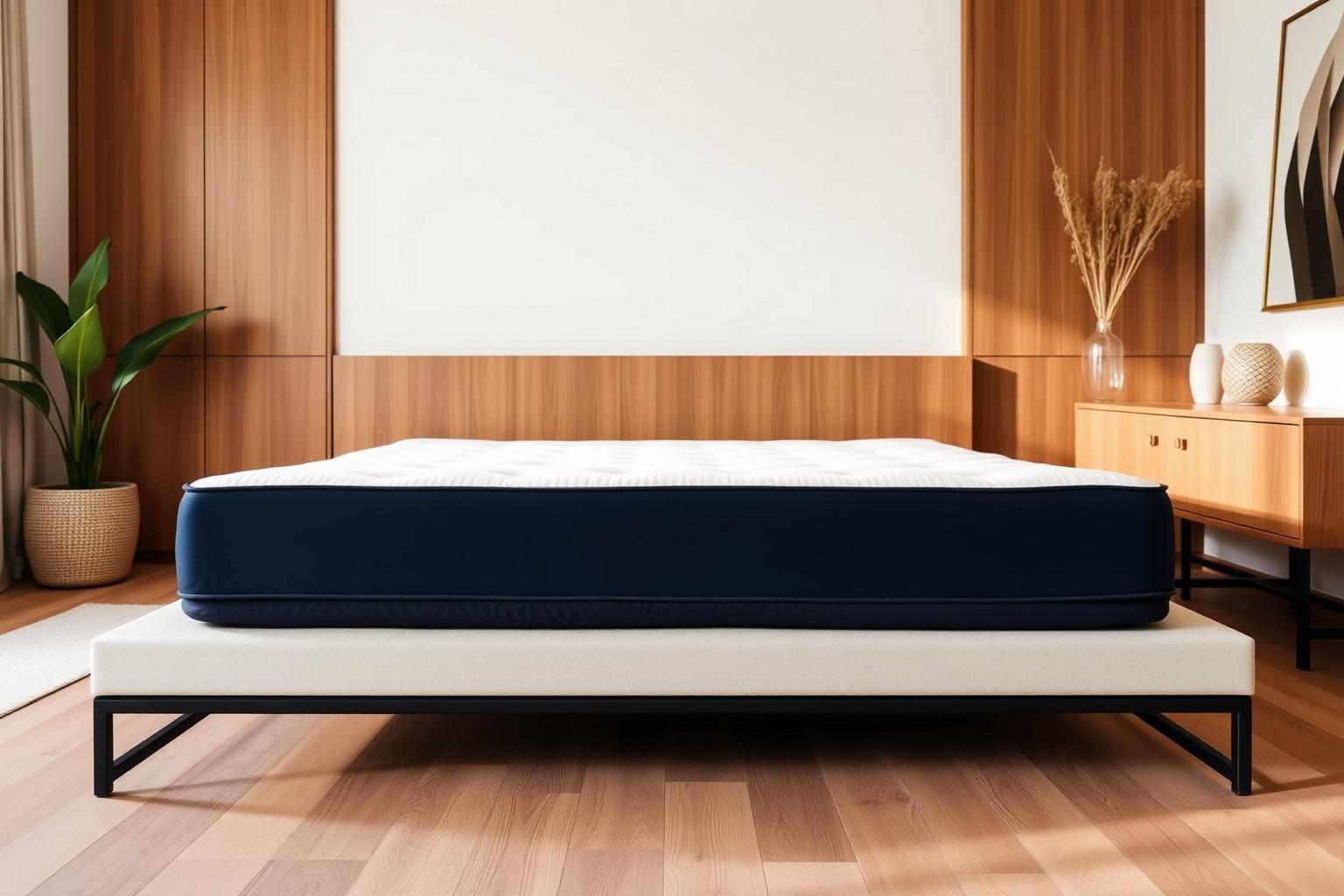
Coil gauge and coil count
In a hybrid or innerspring mattress, the support core does the real work. Look for coils in the 12.5 to 13.5 gauge range — remember, a lower gauge number means a thicker, firmer wire. Thin 15-gauge coils feel plush in a showroom but compress too easily under higher loads. A queen should have at least 800 pocketed coils; more coils means each one carries less load and the support stays even across the surface.
Foam density, not foam thickness
Density is the single best predictor of foam durability, and almost nobody advertises it. For polyfoam comfort layers, you want at least 1.8 lb/ft³; for memory foam, 4 lb/ft³ or higher. Anything below those figures will feel wonderful for six months and then pack down. If a brand won't tell you the foam density, assume the worst.
Latex: the heavyweight champion
Natural latex is the most durable comfort material sold in mattresses, full stop. It's responsive rather than slow-sinking, it resists permanent impressions far better than polyurethane foam, and it sleeps cooler because it doesn't envelope the body. For heavier sleepers, a latex or latex-hybrid design is usually the longest-lived option at a given price.
Edge support
Edges take a disproportionate load — it's where you sit to put on shoes, and where you end up when a partner takes the middle. Look for a reinforced perimeter, either a firmer foam encasement or heavier-gauge border coils. Weak edges make a queen feel like a full and are usually the first place a mattress sags.
Firmness: add a point
Whatever firmness guide you've read, add roughly one point. A 'medium' mattress rated 6/10 for an average sleeper will feel closer to a 5 for someone over 230 pounds, because you compress deeper into the comfort layers and closer to the support core. Most heavier back and stomach sleepers do best in the 7–8 range; heavier side sleepers usually land at 6–7, soft enough for shoulder relief but structured enough to keep the hips up.
- Back sleepers over 230 lbs: firm (7–8/10), zoned coils preferred.
- Side sleepers over 230 lbs: medium-firm (6–7/10) with at least 3 inches of comfort material.
- Stomach sleepers over 230 lbs: firm (7.5–8.5/10) — hip sag is the enemy here.
- Combination sleepers: medium-firm (6.5–7.5/10) with responsive latex or hybrid construction so repositioning is easy.
What to avoid
- All-foam beds under 10 inches thick — not enough material between you and the base.
- Pillow-tops with low-density fiberfill — they pack flat within months.
- Thin 'budget hybrids' with 15-gauge coils and 2 inches of foam — a showroom trick.
- Any mattress without a stated weight capacity or with a warranty that prorates after year two.
- Weak foundations. Slats must be no more than 3 inches apart with a center support rail, or the mattress bows regardless of build quality.
Think in cost per year, not sticker price
A $900 mattress replaced every three years costs $300 a year. A $2,000 mattress that lasts ten costs $200. For heavier sleepers, durability isn't a luxury feature — it's the entire math of the purchase. Buy the best coil system and the densest comfort materials you can afford, protect the bed with a waterproof protector from night one, and rotate it head-to-foot every three months to even out wear.
Where the Linden mattress fits
The Linden hybrid uses a pocketed-coil support core with a responsive latex-and-foam comfort system, and the Firm option lands in the range most heavier back and stomach sleepers need. The coil perimeter is reinforced for edge support, and the 120-night trial means you can verify the support under real conditions — your body, your bedroom, your sleep position — rather than a five-minute showroom lie-down. If it isn't right, the exchange is free.
Built to hold up, night after night
Shop the Linden Firm