Best Mattress for Couples: Motion, Space, and Compromise
How to choose a mattress that works for two people — motion isolation, edge support, firmness compromises, and the right size.
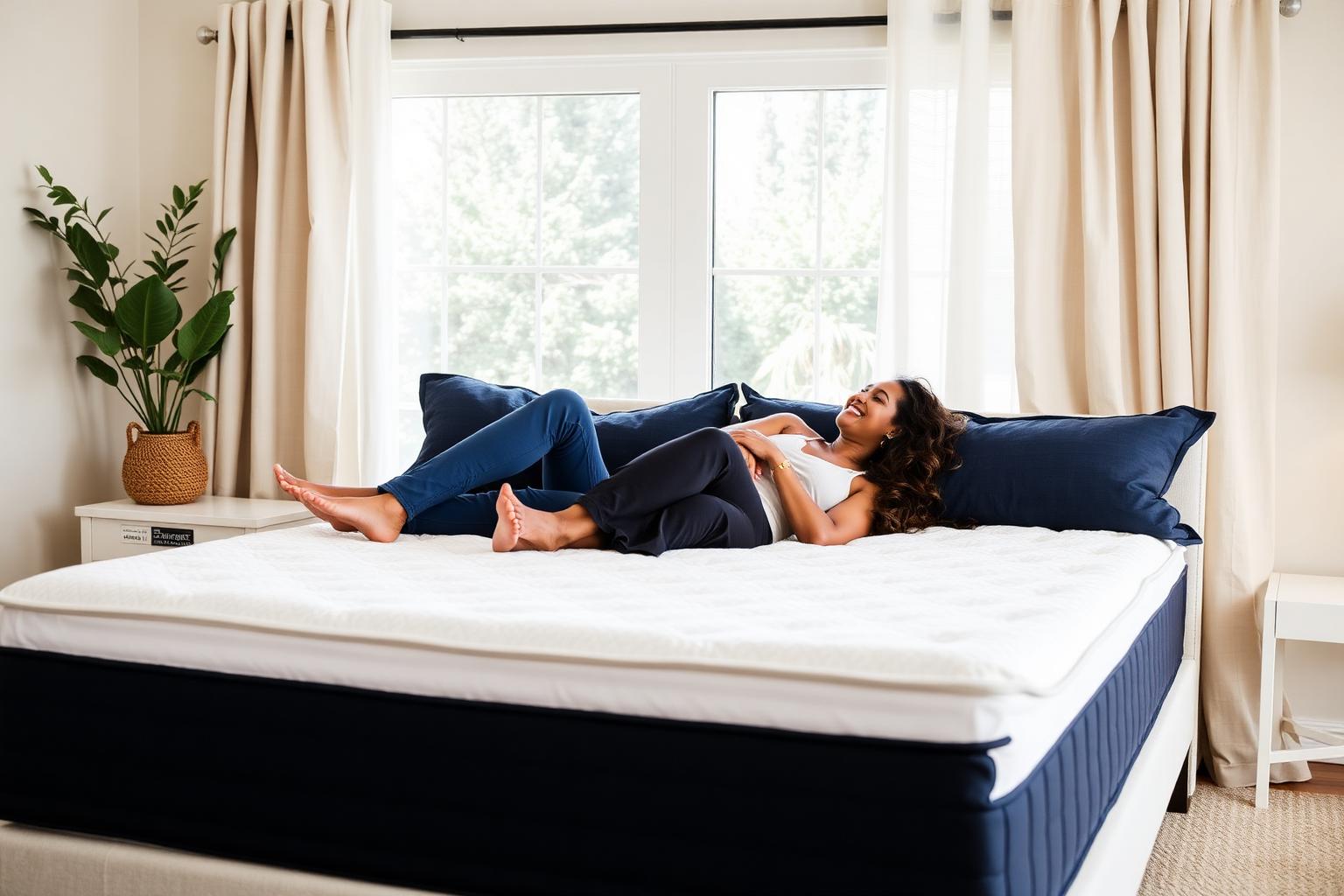
Shopping for a mattress as a couple is a different problem than shopping for one. You have two sleep positions, two body weights, two temperature preferences, and two definitions of what 'firm' means. The bed has to handle motion when one person gets up, provide enough space so neither feels crowded, and find a firmness that doesn't leave one partner miserable.
Here's how to think through each variable without ending up on a bed that one of you secretly hates.
Motion isolation matters more than you think
If one partner is a light sleeper or gets up during the night, motion isolation is the difference between sleeping through the disturbance and waking up every time the other person rolls over. All-foam mattresses isolate motion best because there's no connected spring system to carry vibration across the bed.
Hybrids with pocketed coils are a close second. Because each coil is wrapped individually, movement stays local rather than rippling across the surface. Traditional innersprings with connected coils are the worst for motion transfer and are generally a poor choice for couples.
Size is the easiest upgrade

A Queen gives each person about 30 inches of width — the same as a crib mattress. For many couples, that's fine. But if either of you sprawls, runs hot, or brings a pet into bed, a King adds 16 inches of total width and is one of the most meaningful sleep upgrades you can make.
Cal King is only better if one of you is tall enough to need the extra length. Otherwise, a standard King gives you more usable space.
Firmness when you disagree
When partners need different firmness levels, the heavier sleeper usually wins on support. A mattress that's too soft for the heavier partner will sag in the middle and pull both sleepers into the trough. From there, the lighter partner can add a topper to soften their side.
A true medium — around 5.5 to 6.5 out of 10 — is the safest compromise for most couples. It's soft enough for side sleepers and supportive enough for back and stomach sleepers under about 230 pounds.
Edge support and intimacy
Couples use more of the mattress surface than solo sleepers. Strong edge support keeps you from feeling like you're rolling off when you spread toward the sides, and it also makes the bed feel larger. Foam-encased or reinforced coil edges perform better than beds with weak perimeter support.
Find a feel you both can love
Take the Firmness Finder