Best Mattress for Combination Sleepers: One Bed, Every Position
Change positions all night? You need responsiveness, balanced firmness, and easy movement. Here's how to choose.
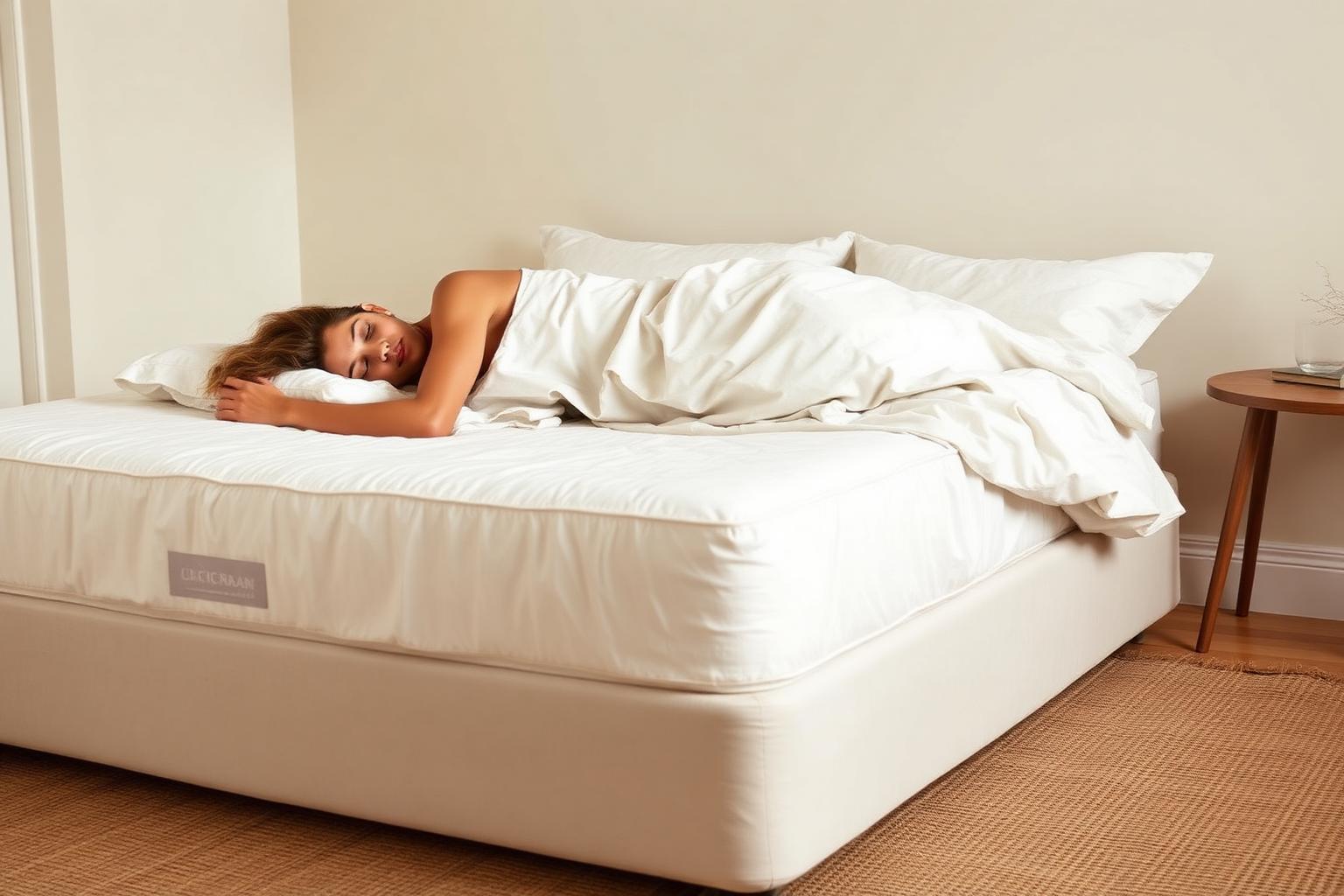
Most people don't sleep in one position. You fall asleep on your side, wake briefly on your back, drift off again half on your stomach. If that sounds like you, you're a combination sleeper — and you're actually the majority. Studies of sleep movement suggest most adults shift position ten to forty times a night, even if they only remember one.
That creates a specific shopping problem. A mattress optimized for a single position — ultra-plush for a dedicated side sleeper, extra-firm for a dedicated stomach sleeper — will be wrong for half of your night. Combination sleepers need the all-rounder: a bed that performs well enough in every position and, critically, makes changing positions effortless.
Responsiveness is the headline feature
Every position change requires you to push against the mattress, roll, and settle. On slow-response memory foam, that means climbing out of a body-shaped crater several times a night. Each repositioning micro-wakes you — often without reaching consciousness — and fragments the deep sleep you're trying to accumulate. This is why so many people report sleeping 'hot and stuck' on dense foam beds: the same property that makes memory foam motion-isolating makes it movement-resistant.
Responsive materials — latex, pocketed coils, and faster-recovery foams — push back as you move and help you roll rather than trapping you. The difference is subtle in a showroom and enormous at 3 a.m. When you test a mattress, don't just lie still: roll from side to back to side and notice how much effort it takes. If repositioning feels like work, keep looking.
Firmness: the middle wins

Combination sleepers should target a medium to medium-firm feel, roughly 5.5 to 6.5 on a 10-point scale. That's soft enough to cushion shoulders and hips during your side-sleeping stretches, and firm enough to keep your pelvis from dropping during back and stomach stretches. It's the one case where the industry's most popular firmness rating is genuinely the right answer rather than a compromise.
Body weight shifts the target as always. Under 130 pounds, aim for the softer end of medium. Over 230 pounds, aim medium-firm to firm, because you'll compress deeper into the comfort layers. If one position dominates your night — say, seventy percent side — weight your choice toward that position's ideal and accept 'good enough' in the others.
Materials, ranked for combination sleepers
- Latex hybrid: the gold standard. Buoyant, breathable, instantly responsive, durable. The easiest surface to move on.
- Pocketed-coil hybrid with responsive foam: close second, often more affordable, with excellent airflow.
- All-latex: superb movement and longevity, but heavy and expensive.
- Slow memory foam: last place. Contouring is pleasant; the stuck feeling is not.
The partner problem
Combination sleepers who share a bed face a double challenge: you move a lot, and every move risks waking your partner. This is where pocketed coils earn their keep — each coil compresses independently, so motion stays localized instead of rippling across the surface. Pair that with a responsive (not sinky) comfort layer and you get the rare combination of easy movement for you and low disturbance for them. Individually wrapped coils plus latex is about as good as this gets.
Size helps too. If two people share a full or queen and one is an active combination sleeper, a king is a quality-of-life upgrade measured in hours of sleep per week. Motion that reaches your partner at all is gentler at thirty-eight inches of separation.
Pillow strategy for position-changers
A single pillow optimized for one position will be wrong for the others. The practical solution is a medium-loft, moldable pillow — one you can scrunch higher for side sleeping and flatten for back or stomach stretches. Shredded latex and adjustable-fill designs work well here because you can redistribute fill in seconds, half-asleep, without fully waking.
How to trial a mattress as a combination sleeper
Track two numbers for the first month: how many times you remember waking to reposition, and how you feel at 10 a.m. If awakenings drop and mornings feel clearer, the mattress is doing its job. If you're sleeping in one position all night because moving is a chore, that's not adaptation — that's a mattress locking you in place, and it will show up as stiffness within a few weeks.
The Linden Medium is our combination-sleeper recommendation: a zoned pocket-coil core for support in every position, a responsive latex-blend comfort layer that makes rolling effortless, and pocketed coils that keep your movement from becoming your partner's problem. All three feels ship with the same 120-night trial, so you can exchange if your first choice isn't the one.
Not sure which feel fits your sleep style?
Take the Firmness Finder