Best Mattress for Athletes: Sleep Is the Recovery Tool
Training hard? Your mattress is recovery equipment. Cooling, pressure relief, and support features that help active bodies repair overnight.
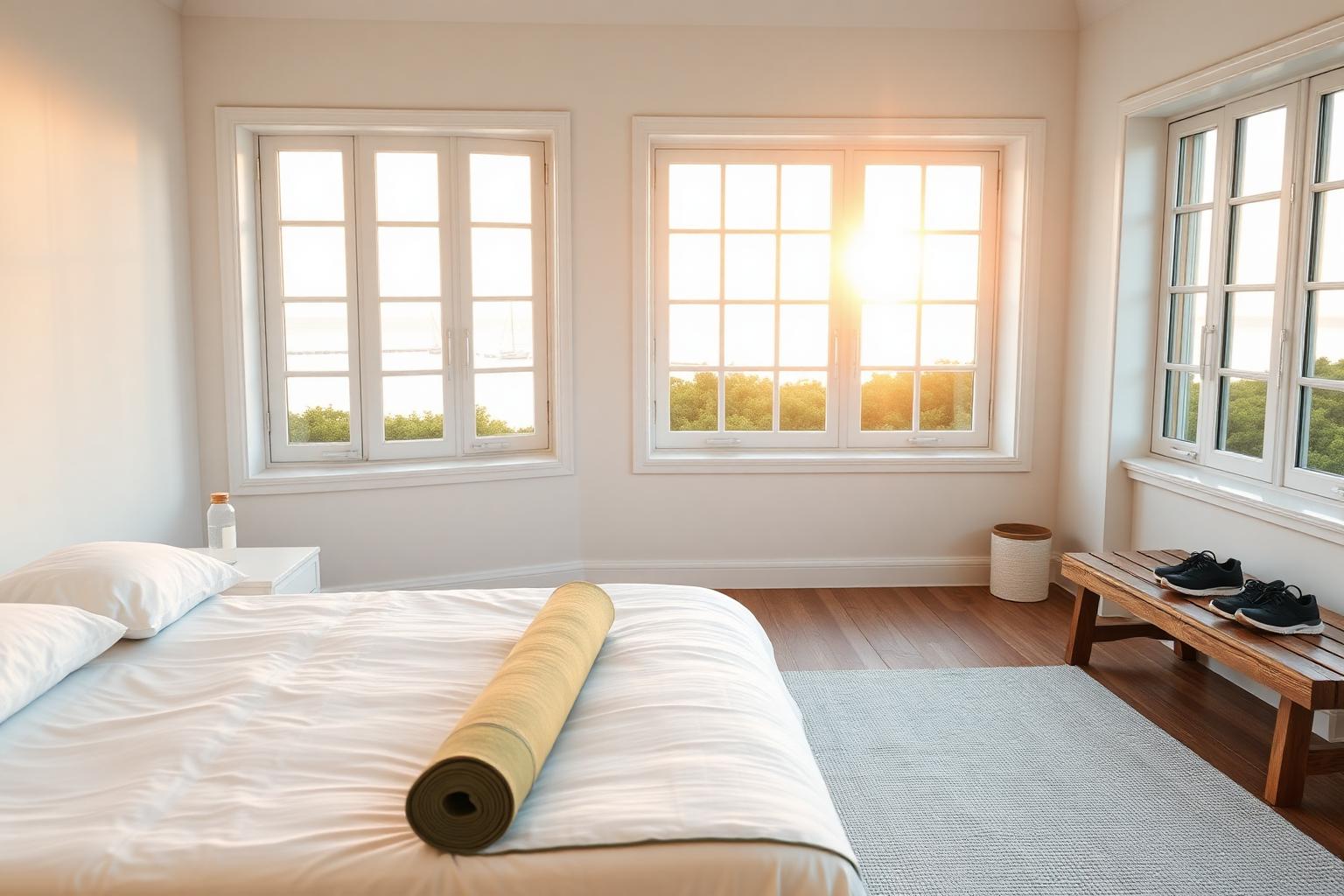
Serious athletes track everything: macros, heart-rate variability, training load, split times. Then they sleep seven hours on a ten-year-old mattress and wonder why recovery lags. The research on this is unambiguous — the majority of growth hormone release happens during deep slow-wave sleep, and sleep extension studies in collegiate athletes have shown measurable improvements in sprint times, reaction time, and accuracy. Your mattress isn't furniture. For an active body, it's recovery equipment.
What training does to a sleeping body
Hard training creates three overnight demands that a mattress either helps with or hinders. First, muscle repair: deep sleep is when the body does its heaviest tissue rebuilding, and anything that fragments sleep — heat, pressure points, a partner's movement — steals from that window. Second, inflammation: trained muscles are often slightly inflamed and tender, which makes pressure points more noticeable than they'd be for a sedentary sleeper. Third, core temperature: athletes' bodies run warm, and exercise within a few hours of bed elevates core temperature into the early sleep cycles, right when the body needs to shed heat to initiate deep sleep.
Cooling is the headline feature

Every 'sleep like an athlete' product list leads with cooling, and for once the marketing matches the physiology. Dropping core temperature is the body's trigger for sleep onset, and athletes fighting elevated evening temperatures need a mattress that moves heat away rather than storing it. The hierarchy: coil cores beat foam cores for airflow, latex beats memory foam for surface temperature, and breathable covers (cotton, Tencel) beat dense polyester knits. A hybrid with a latex comfort layer is the coolest mainstream construction you can buy without gadgets.
Pressure relief for sore muscles
A marathon-training block or a heavy squat cycle changes what 'comfortable' means. Hips and shoulders that are already inflamed can't tolerate a firm surface pressing back all night — you'll toss to escape the pressure, fragmenting sleep in the process. Athletes generally do well with a true medium (5.5–6.5/10): enough contouring to cradle tender joints, enough support to keep the spine neutral. Side-sleeping athletes — the majority — should lean toward the softer end of that range during high-volume training blocks.
Zoned support earns its keep here. Firmer support under the hips with more give under the shoulders accommodates the athletic build — broader shoulders, narrower hips — better than a uniform surface. It's one of the few mattress features that maps directly onto an athlete's physiology.
Durability: bigger, heavier, harder on beds
Athletes trend heavier than average — muscle is dense — and a 210-pound training cyclist or a 240-pound rower puts the same accelerated wear on a mattress as any heavier sleeper. Foam density and coil gauge matter: look for comfort foams at 1.8 lb/ft³ or better, memory foam at 4 lb/ft³ or better, and coil systems at 13.5 gauge or thicker. A mattress that develops a body impression in year two is stealing recovery for the next five years you keep putting off replacing it.
The recovery checklist
- Cooling: coil core, latex or breathable comfort layers, moisture-wicking cover.
- Pressure relief: medium feel with 2–3 inches of quality comfort material for sore joints.
- Zoned support: firmer hips, softer shoulders — built for athletic frames.
- Motion isolation: if you share the bed, your 5 a.m. training alarm shouldn't cost your partner deep sleep.
- Durability: dense foams and heavy-gauge coils that hold up under a heavier, more muscular body.
- Edge support: for the morning sit-and-lace-up ritual.
Beyond the mattress
The mattress is the platform, but athletes should think in systems. An adjustable base that elevates the legs above the heart after long training days aids venous return and reduces that heavy-leg feeling. Cooling bedding extends the temperature work the mattress starts. And a consistent sleep schedule — boring as it sounds — outperforms any gadget: growth hormone release is tied to the first deep-sleep cycles of the night, so a regular bedtime is worth more than a later, longer one.
The Linden hybrid checks the athlete's boxes: a breathable zoned pocket-coil core, a responsive latex-blend comfort layer that relieves pressure without trapping heat, and edge-to-edge support built to handle bigger frames. Pair it with the ES500 adjustable base for post-training leg elevation, and the 120-night trial covers an entire training block — long enough to know if your recovery actually improved.
Train hard. Recover harder.
Shop the Linden mattress