The Best Bedroom Temperature for Sleep (and How to Actually Get There)
Why 65–68°F is the research-backed sleep range, how core body temperature drives sleep onset, and practical fixes for a bedroom that runs hot.
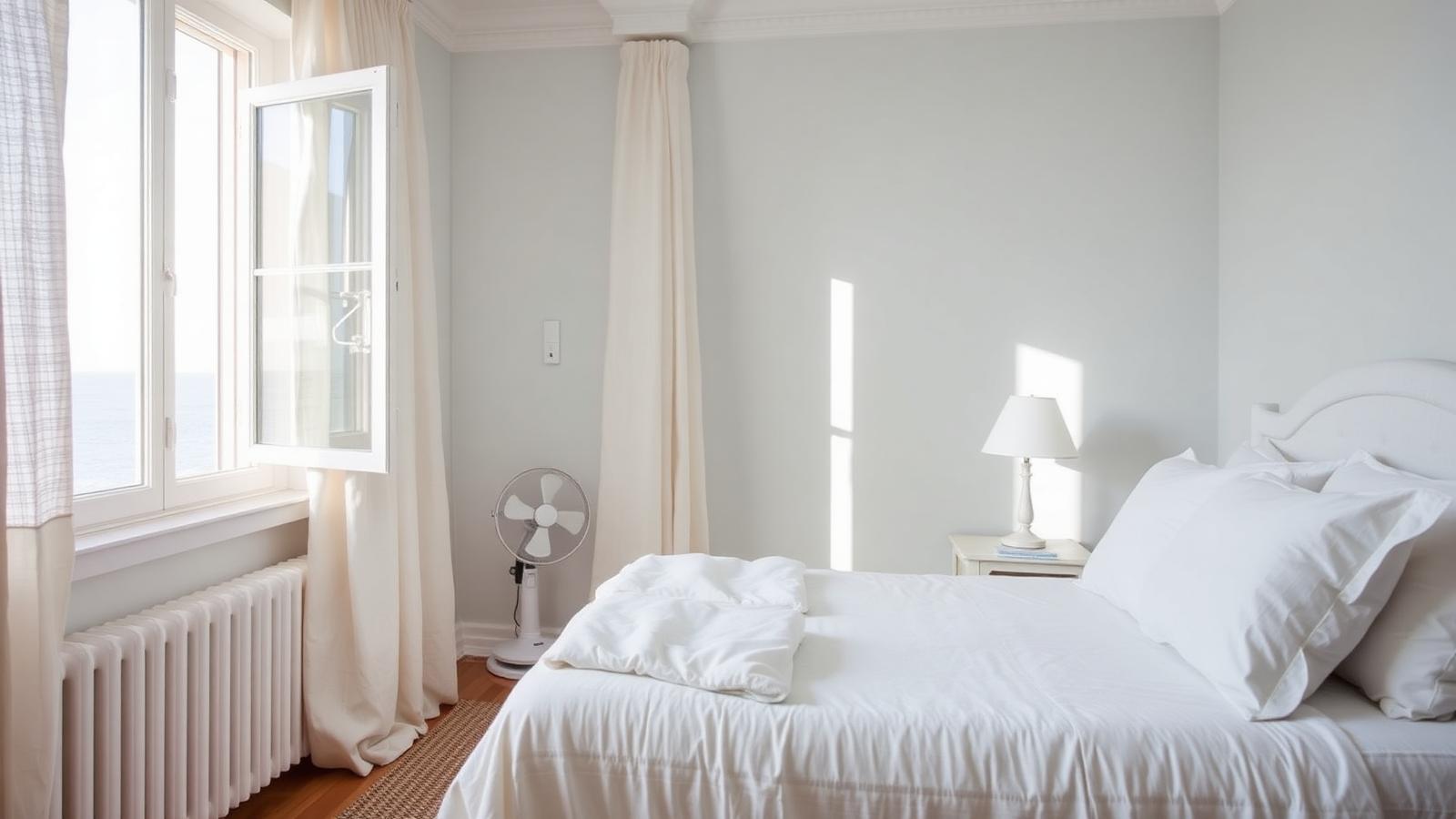
If you could change one thing about your bedroom tonight and improve your sleep measurably by tomorrow, it would be the temperature. Not the mattress, not the pillow, not a supplement — the thermostat. Temperature is the environmental variable with the tightest, best-documented relationship to sleep quality, and it's the one most people have set wrong.
The number: 65 to 68°F
Sleep research consistently lands on roughly 60–68°F (15.6–20°C) as the optimal bedroom range for most adults, with 65–68°F a safe target for the majority. That feels cold when you're standing in the room fully dressed. It should. You're not setting the temperature for someone awake and upright — you're setting it for someone lying still under a blanket, whose metabolic rate has dropped and whose body is trying to release heat.
Why cold helps: the core temperature drop

Sleep onset is triggered by a fall in core body temperature of about one to two degrees Fahrenheit. Your body accomplishes this by opening blood vessels in the hands, feet, and face — distal vasodilation — and radiating heat out through the skin. If the surrounding air is warm, there's nowhere for that heat to go, the core temperature doesn't fall on schedule, and sleep onset is delayed. That's the physiology behind lying awake on a hot night.
The same mechanism keeps working all night. Your core temperature continues to drop and bottoms out roughly two hours before your natural wake time, then rises to help you wake. Overheating in the middle of that curve produces exactly what people describe as 'I sleep fine but wake up at 3 a.m.' — your body surfaces out of deep sleep to shed heat.
The warm shower paradox
A warm bath or shower 60 to 90 minutes before bed reliably helps people fall asleep faster. It sounds backwards — you're heating yourself up. What actually happens is rebound: the warmth pulls blood to the skin surface, and when you get out, that dilated peripheral circulation dumps heat rapidly, accelerating the core temperature drop. Timing is the whole trick; do it five minutes before bed and you get the heating without the rebound.
Who needs it cooler, and who doesn't
- Menopausal or perimenopausal sleepers: hot flashes are often the primary cause of 2–4 a.m. wakeups. Aim for the low end, 62–65°F.
- Couples with different preferences: set the room to the cooler partner's preference and let the warmer one add blankets. Adding warmth is easy; removing it isn't.
- Infants and older adults: both regulate temperature less efficiently. 68–70°F is generally more appropriate.
- Heavier sleepers: more body mass means more heat to shed and deeper compression into the mattress, which reduces airflow around the body.
Getting there without a giant energy bill
- Program the thermostat to start dropping about an hour before bedtime, not at bedtime — the room needs a head start.
- Run a fan. Moving air over skin evaporates moisture and pulls heat off you at a rate still air can't match, which means you can hold a slightly warmer setpoint and still feel cooler.
- Close blinds during the day on sun-facing windows. Blocking afternoon solar gain is cheaper than removing the heat later.
- Crack a window overnight if outdoor air drops below indoor air — coastal climates make this nearly free.
- Swap synthetic sheets for cotton percale, linen, or Tencel. Percale breathes; sateen and microfiber insulate.
- Use a lighter duvet in summer and layer in winter rather than running one heavy comforter year-round.
You can cool the room, but if the eight inches you're lying on stores heat, you're still sleeping in a warm pocket of your own making.
The mattress is a thermal surface
Roughly a third of your body is in direct contact with the bed all night, and that contact area is where heat accumulates. Traditional memory foam is the worst offender: it's dense, closed-cell, and viscoelastic by design, meaning it softens as it warms and then conforms more closely, further reducing airflow. Gel infusions and copper particles help at the margins but don't change the underlying structure. Once the foam reaches body temperature, it has nowhere left to move that heat.
Coil-based hybrids behave differently. The open space inside a pocket-coil unit is a ventilation layer — every movement pumps air through it. Latex has an open-cell structure and is naturally more breathable than memory foam, and it doesn't soften with heat. Natural-fiber covers — cotton, wool, Tencel — move moisture away from the skin instead of holding it against you. Stack those together and the bed stops being an insulator.
Also check the protector
A cheap vinyl-backed mattress protector can undo everything above. If it crinkles, it's plastic sheeting, and it's a vapor barrier sitting directly under your sheet. Modern TPU-membrane protectors are waterproof and still permeable to air and moisture, and cool-touch fabrics add a genuine drop in surface temperature at first contact.
A quick diagnostic
Set the room to 66°F for a week. If you still wake up hot, the room isn't the problem — the sleep surface is. That's a useful test to run before spending money, and it separates a thermostat fix from a mattress fix.
Linden's build targets exactly that failure mode: a zoned pocket-coil core for airflow, a responsive latex-blend comfort layer that doesn't trap heat the way memory foam does, and a breathable natural-fiber cover. Pair it with the Ice Mattress Protector if you want the cool-touch surface layer too.
Built to move heat, not hold it
Shop the Linden mattress